This wasn’t the plan
I became a CRNA in 2013 and did what most high-achieving clinicians do — I went straight to work. I took a 1099 contractor position averaging 50-60 hours a week, including a 24-hour OB/1st call shift every week. I was good at it. I was productive. And after two and a half years, I had nearly burned myself to the ground.
I quit and took a pay cut to work 40 hours a week for a smaller group. Less hours, but I noticed something that unsettled me — I was struggling to show up with empathy. I was going through the motions. The burnout hadn't lifted. It had just gotten quieter. I felt like a robot.
Then the group lost a contract. Last hired, first to go. The rug came out from underneath me. What surprised me wasn't the fear of losing income. It was how much of my identity had been wrapped up in being a CRNA — in the title, the skill, the paycheck. I had spent years earning significant income and had almost nothing to show for it. Not because I couldn't afford to build something. Because I hadn't thought to.
The first time real estate lit me up
I found a new job. Three ten-hour shifts a week. And for the first time in years, I had space to breathe. I picked up photography. And then — almost on instinct — I bought a historic mansion in Oklahoma and turned it into an Airbnb. It also had a carriage house I rented long-term. I taught myself marketing, advertising, and what it meant to be a landlord from scratch. The creativity… the strategy… the building of something outside the hospital gave me a kind of joy the OR never had.
It also gave me my first real proof of concept. I bought that property in 2018 for $200,000 with $50,000 down. I sold it two years later for $290,000 — a $90,000 return on a $50,000 investment. 180% in two years. In Oklahoma— what most people would call an unremarkable market.
That number changed how I thought about everything. You don't need a hot market. You don't need luxury real estate. You need a durable asset in a stable market.
Then 2020 arrived and took everything with it. I got laid off, again — COVID had gutted case volumes. My husband had quietly developed a serious alcohol and narcotic addiction over the previous few years that the stillness of the world being shutdown had clarified. What had been a persistent hum quickly became a glaring problem. I gave him a choice: get help or end the marriage. He filed for divorce. I couch-surfed at two different places before I found an apartment. I sold the Airbnb and my primary home in the divorce. And by the end of the year, with nothing tying me anywhere, I made a decision:
I was going to live my life for me.
How a CRNA Became an Acquisition Advisor
Colorado.
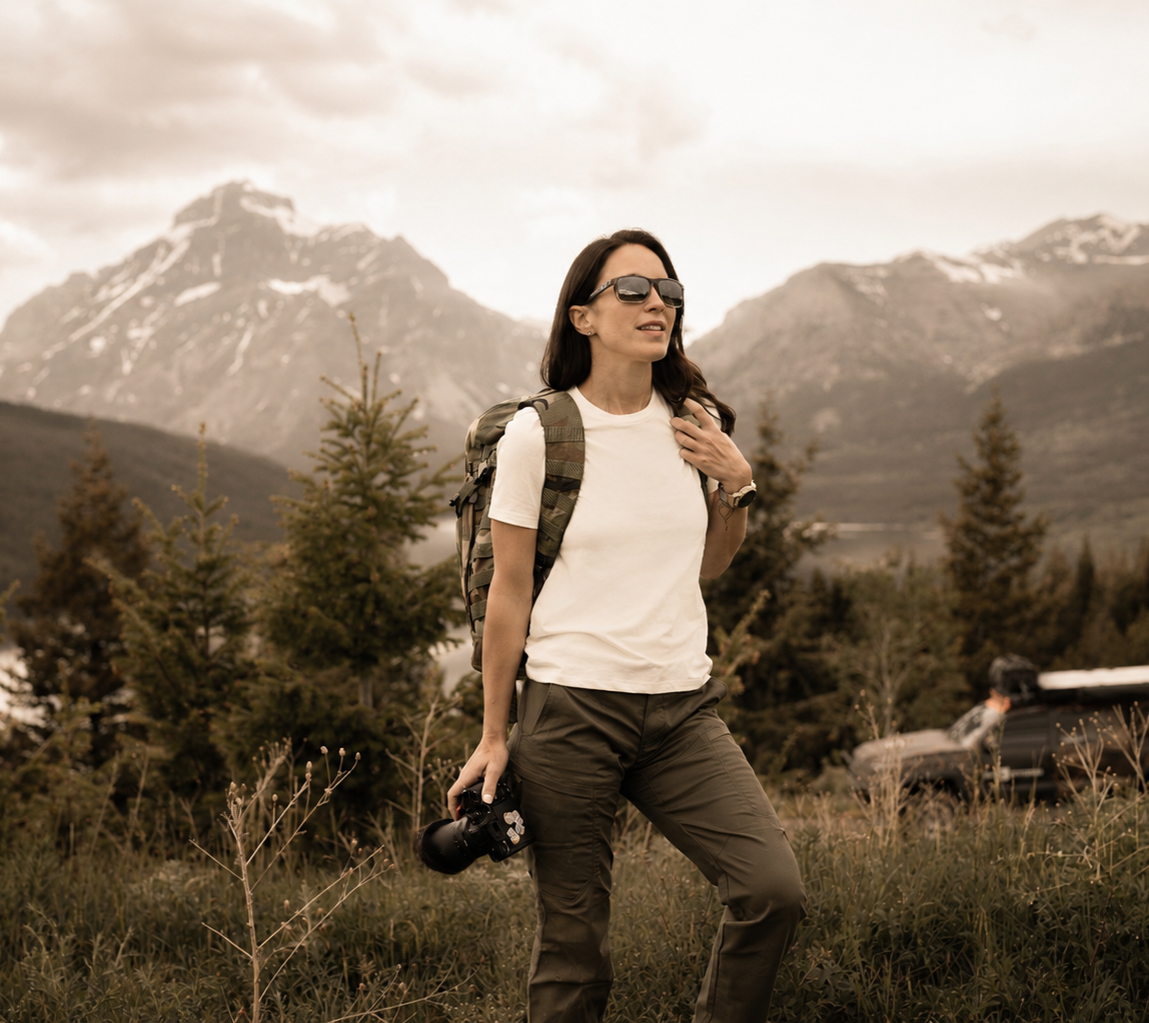
I moved to Colorado and found a low-stress position in the Rocky Mountains — 35 hours a week, give or take. I hiked. I backpacked. I kayaked and fished and learned what it felt like to not be depleted.
But something was still missing. I still felt disenchanted with working in healthcare. That's when I started working with a realtor to buy a home for myself, hoping a peaceful home would outweigh the quiet moral friction of a system that often prioritized throughput and margins over true healing and disease prevention. A year of offers. A year of getting outbid (once by $590k). And one afternoon, sitting across from her — frustrated, burned out on the search and my career… questioning the whole thing — she asked me the question that changed everything.
"Have you ever considered investing your capital instead of locking yourself into a career that requires your continued burnout just to make the payment?"
It hit me— why hadn’t I thought of this? I could use my saved capital to create actual income. I could then use that income to create more capital to deploy to generate more income. It was a self-feeding system. My sweet realtor had over 20 rental properties, and demonstrated the potential on paper for me. She took me under her wing and mentored me the next few years. In 2024 I deployed $280,000 across three rental properties. Two years later, that portfolio is worth $1.69 million — $434,000 in equity, $10,200 in annual cash flow, and a level of optionality I couldn't have imagined from that apartment in 2020.
I now live in Montana. I work around three days a month. I have the flexibility to fly to be with my mom — who just completed radiation, chemotherapy, and a 12-hour surgery for breast cancer — without asking for PTO or having to find coverage. That flexibility is not an accident. It's the result of assets that work for me whether I'm in the hospital or not.
Why I created Clinician to Cash Flow
I spent the first decade of my career doing everything right by every conventional measure — and ending up laid off twice, burned out repeatedly, and with nothing durable to show for the income I'd generated. Healthcare was sold to me as a golden ticket of a stable, predictable, always-in-demand path that was supposed to guarantee security. But it ended up being a system that consumed my time, reshaped my identity, and forced me to reconcile the gap between helping people and how the system actually operates— all in exchange for money that didn’t feel like a fair trade. Nobody told me there was another way. No one in healthcare talks about this. We are trained to earn and spend and defer and wait — and to tie our entire sense of self to a career that will take everything we give it and ask for more.
I created Clinician to Cash Flow because I needed someone to show me there was a way out. That I could peel myself away from this depleting identity and live free. Because burned-out providers deserve to know that the exit ramp exists if you need it— and that it doesn't require quitting, or waiting until retirement, or having more capital.
It requires one decision. One property. And someone who's already made the mistakes showing you where to step.
That's what I'm here for.
If this resonated
You don't have to have it all figured out. You just have to be tired enough of waiting.
If you're a provider who's been thinking about this longer than you'd like to admit — reach out. Tell me where you are. We'll figure out where to start.
No pitch. No pressure. Just a conversation.